A Complete Cultural Guide for Travelers
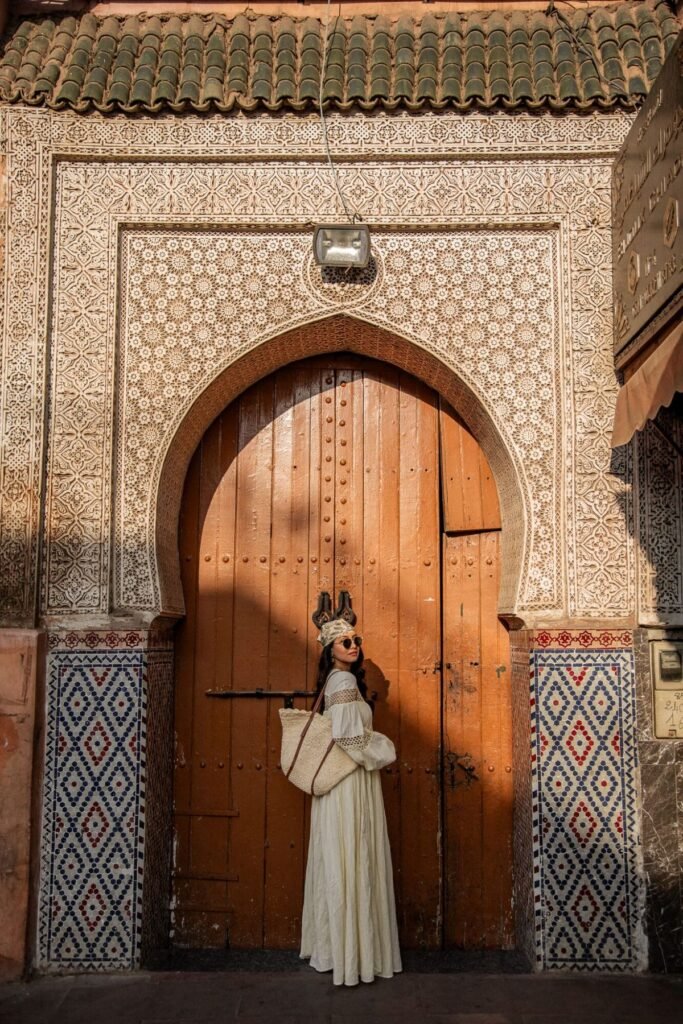
Marrakech is a living museum where history, architecture, and tradition blend seamlessly. Founded nearly a thousand years ago, the city is home to some of the most important historical sites in Morocco.
This guide highlights the must-visit historical places in Marrakech, offering cultural context, practical tips, and SEO-friendly insights for travelers from the US and UK seeking authentic experiences.
Why Marrakech Is One of Morocco’s Most Historic Cities
Marrakech was founded in 1062 and quickly became a political, religious, and cultural center of North Africa. Today, its historic monuments reflect centuries of Berber, Islamic, and Andalusian influence.
Travelers searching for “historical places to visit in Marrakech” will find a city rich in preserved architecture, ancient traditions, and UNESCO-recognized heritage.
The Most Important Historical Places in Marrakech
The Medina of Marrakech (UNESCO World Heritage Site)
The Medina is the historical heart of Marrakech and one of the most visited heritage areas in Morocco. Surrounded by ancient red walls, it has remained largely unchanged for centuries.
Why it matters
- UNESCO World Heritage Site
- Home to souks, mosques, and palaces
- Represents traditional Moroccan urban life
Exploring the Medina is essential for understanding Marrakech’s past.
Jemaa el-Fnaa: The Soul of the City
Jemaa el-Fnaa has been the city’s central gathering place for centuries. Recognized by UNESCO as Intangible Cultural Heritage, it preserves oral traditions, music, and storytelling.
Historical significance:
- Marketplace since medieval times
- Center of social and cultural life
- Living example of Moroccan heritage
Koutoubia Mosque
The Koutoubia Mosque is Marrakech’s most iconic landmark. Built in the 12th century, its minaret became a model for mosques across North Africa and Spain.
Key facts:
- Dates back to the Almohad dynasty
- Visible from much of the city
- Non-Muslims may admire the exterior
Bahia Palace
Bahia Palace is one of the finest examples of Moroccan palace architecture. Built in the late 19th century, it reflects the wealth and power of former viziers.
Why visit:
Why visit:Stunning zellige tiles and carved ceilings
Peaceful courtyards
Excellent insight into royal Moroccan life
El Badi Palace
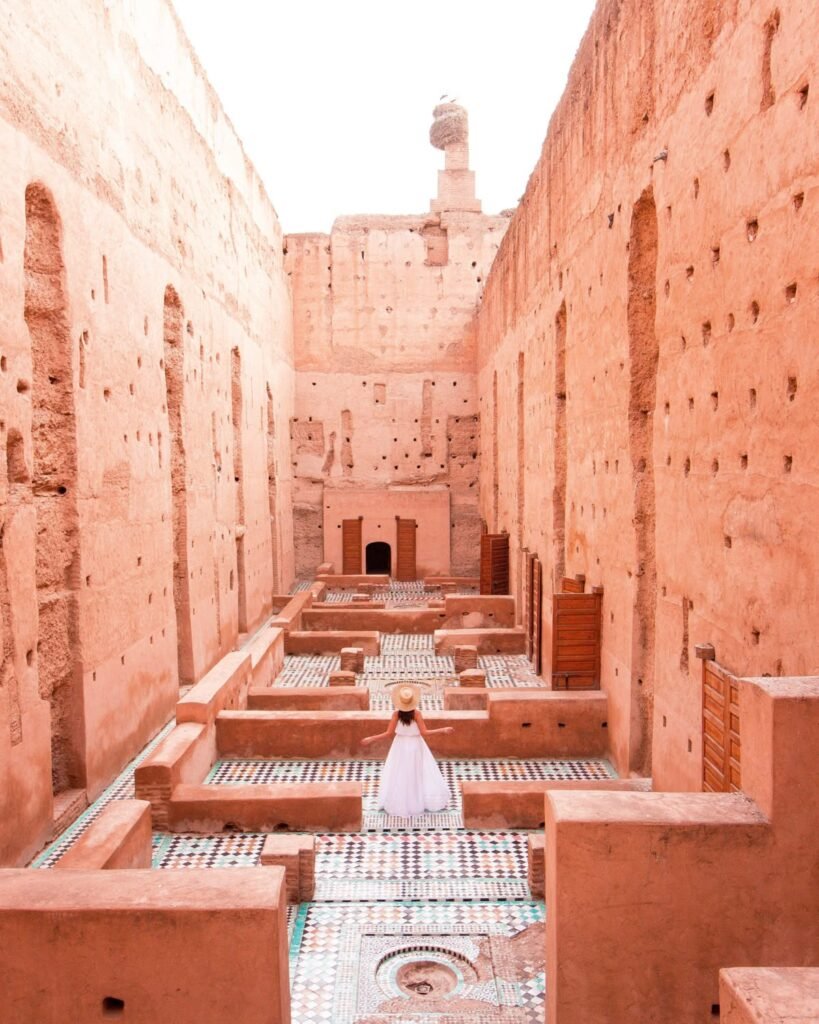
Once a magnificent palace, El Badi now stands as atmospheric ruins. Built in the 16th century by the Saadian dynasty, it symbolized Morocco’s golden age.
Historical value:
- Former diplomatic palace
- Panoramic views from the walls
- Powerful reminder of imperial history
Saadian Tombs
Hidden for centuries and rediscovered in 1917, the Saadian Tombs house members of the Saadian royal family.
Why they matter:
- Date back to the 16th century
- Beautiful marble and cedarwood decoration
- Important royal burial site
Ben Youssef Madrasa
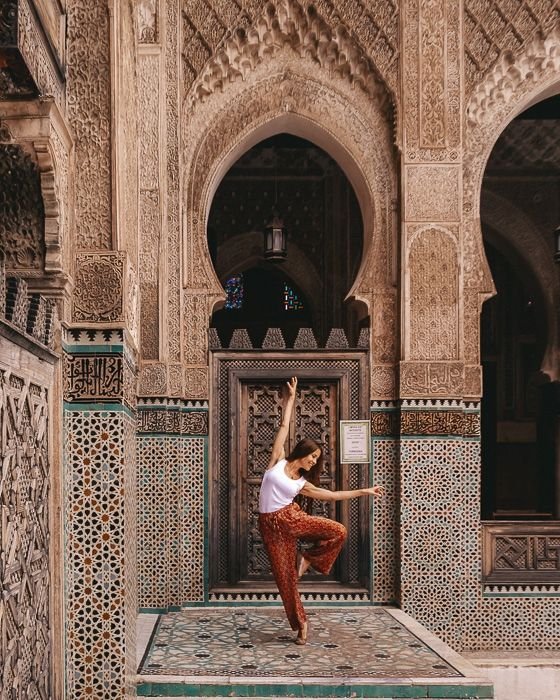
Ben Youssef Madrasa was once the largest Islamic school in North Africa. It is now one of Marrakech’s most impressive historical monuments.
Highlights:
- Intricate Islamic architecture
- Quranic inscriptions
- Insight into traditional education
Practical Tips for Visiting Historical Sites in Marrakech
- Visit early morning to avoid crowds
- Dress modestly out of respect
- Hire licensed guides for deeper historical insight
- Combine nearby sites for efficient itineraries
Final Thoughts: Discovering the History of Marrakech
Marrakech is more than a destination—it is a journey through centuries of history. From ancient palaces to living traditions, the city offers an immersive cultural experience unlike anywhere else. For travelers from the US and UK, Marrakech stands out as one of the most accessible and rewarding historical cities in North Africa